
sensory role of urothelial cells
Urothelial cells play an active role in bladder physiology by responding to physical/chemical stimuli and signaling to sensory neurons and other cell types in the bladder. Numerous bladder diseases affecting millions of people, including overactive bladder, pain related to recurrent bladder infection, chemotherapeutic cystitis, and bladder pain syndrome, have been suspected to disrupt urothelial sensory signaling, leading to pathological changes to sensory signaling, including pain. While it has been accepted that urothelial cells play a role in bladder sensory function, it is unclear how these cells contribute to the sensation of filling and how it is altered under painful conditions. To unravel the role of urothelial cells in bladder nociception and sensory dysfunction, we have developed a novel mouse model that allows for direct stimulation of urothelial cells using optogenetics, light activated proteins. This project broadly focuses on functionally and molecularly identify the population of sensory neurons responding to direct urothelial stimulation of sensory nerve activity in normal and inflammatory conditions. We are using in vivo electrophysiology, fMRI and wireless implantable LEDs paired with behavior to study this question.

Optimization of Chronic Neuromodulation in Treating Neurogenic Bladder Dysfunction
Lower urinary tract dysfunction is a significant impairment for individuals with spinal cord injury (SCI), and tibial nerve stimulation (TNS) shows promise in enhancing bladder function in this population. However, key questions remain regarding the impact of TNS dosing variables (including dosing duration, intra-dose duration, and time between doses), the timing of interventions in relation to injury, and the long-term effectiveness of chronic TNS application. Testing these approaches in humans is difficult due to patient heterogeneity and variable compliance. As such, TNS studies in humans tend to focus solely on the efficacy of a single approach rather than optimizing or testing different approaches. Pre-clinically, existing research primarily involves acute stimulation in healthy animal models, which limits insights applicable to chronic clinical settings. To address these gaps, this proposal aims to utilize a novel wireless tibial nerve stimulator to explore unanswered questions about TNS therapy for neurogenic bladder disorders. The investigation will focus on three main aims: 1) evaluating the influence of TNS dosing on functional bladder recovery post-SCI, assessing the effects of varying dosing intervals and durations; 2) assessing the optimal timing for TNS intervention during different recovery phases of SCI to enhance therapeutic efficacy; and 3) evaluating how chronic TNS dosing duration influences efficacy in a rat model of SCI. These studies aim to clarify TNS stimulation parameters and improve therapeutic outcomes, which is integral information for ultimately informing future clinical trials and improving care for patients with neurogenic bladder disorders

angiotensin signaling in the bladder
Interstitial cystitis/bladder pain syndrome (IC/BPS) is associated with increased voiding frequency, nocturia, bladder fibrosis, and chronic pelvic pain. It affects between 2.5 to 6.7% of women in the United States. Current treatment options are ineffective for all patients and are associated with detrimental side effects. One understudied signaling peptide/hormone in IC/BPS is angiotensin II (Ang II). In addition to its role in vasoconstriction, water retention, and stress response, Ang II contributes to several diseases by promoting oxidative stress, proinflammatory cytokine release, and fibrosis, resulting in increased nociception and sensory sensitivity. However, compared to other organ systems (cardiac, kidneys, and lungs), relatively little is known about the function of Ang II signaling in the bladder under pathophysiologic conditions. There are several intriguing links between IC/BPS pathology and angiotensin signaling. 1) IC/BPS patients have increased infiltration of mast cells, which represent a source of increased renin and Ang II. 2) IC/BPS patients and animal disease models have increased bladder oxidative stress, and angiotensin signaling increases ROS production. 3) IC/BPS patients have increased expression of inflammatory mediators, which can be released by Ang II downstream signaling. 4) Fibrosis is observed in patients and animal models of IC/BPS, and Ang II signaling has been linked to fibrosis in heart, lungs, liver, and kidneys. Given the foundation of IC/BPS research demonstrating increases in local mast cells/macrophages, oxidative stress, inflammatory mediators, fibrosis, and the wealth of literature describing similar Ang II molecular signaling events in other tissues, we believe it is essential to further explore the role of Ang II in bladder diseases.

Animal model and resource development for preclinical lower urinary tract research
Neuromodulation is routinely used to treat overactive bladder, and more specifically urgency urinary incontinence. Despite the therapeutic benefits of neuromodulation there remains room for improvement. Preclinical animal models may be useful for elucidating the mechanisms of action of neuromodulation to improve efficacy as well as to motivate new forms of neuromodulation. Recent work in our lab has suggested that chronic electrical stimulation in animals, mimicking what is done in humans, may be critical for understanding the mechanisms of neuromodulation. Although mouse models can be advantageous due to the wide variety of genetic tools available for working with mice, executing chronic peripheral nerve stimulation would be exceptionally challenging in mice. Rats are commonly used for studying the effects of acute neuromodulation, but the animal models of overactive bladder and urgency incontinence are lacking. Instead, healthy animals, or animals given chemicals to irritate their bladders (which may be more indicative of a pain model) are used, with the hope that results translate. To test chronic neuromodulation in rats, as well as to test other OAB therapies, there is a need for better rat models of OAB. As part of this Catalytic Tool and Technology Development grant we propose the creation of dataset that measures urological function in 8 different rat strains at various points in time in their lifespan. Strains have been chosen due to their characteristics which we think may impact their urological function (e.g., hypertension, obesity, diabetes, etc.). We expect the data from the various rat strains to provide insights into how the urological function differs in these strains, providing guidance to investigators who wish to use these strains in their urological research. This dataset, along with other previously collected datasets, will be made public in a data portal designed specifically to facilitate the sharing and reanalysis of preclinical urological data. Additionally data analysis tools will be created and made public to facilitate consistent data analysis across studies.
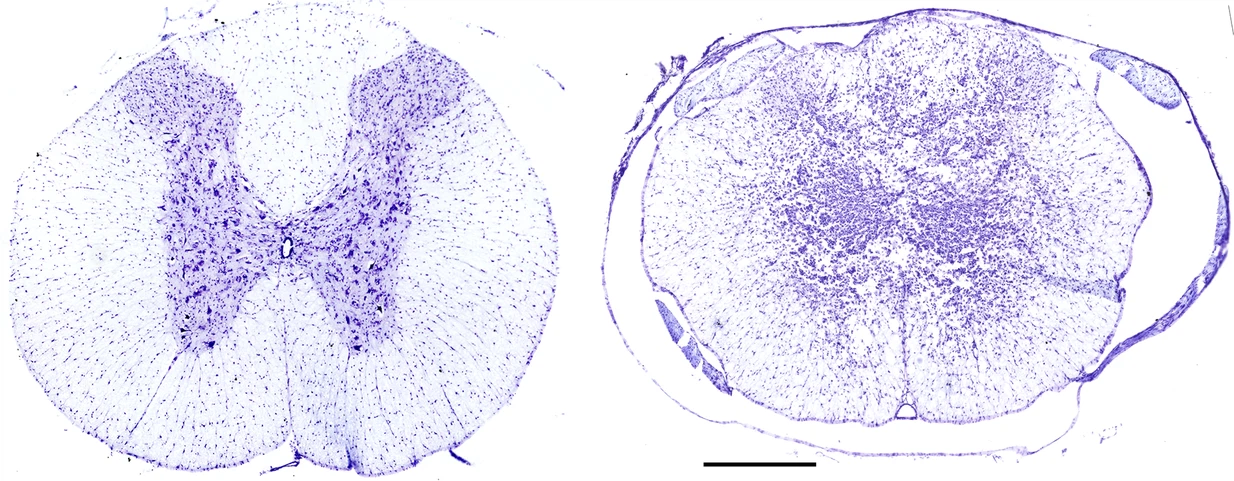
bladder function and spinal cord injury
More than 17,000 Americans suffer from spinal cord injuries yearly, and many of these patients suffer from lower urinary tract dysfunction. One of these bladder disorders is detrusor-sphincter dyssynergia, where the detrusor muscle constricts to push urine out of the bladder, and the urethral sphincters relax to allow urine to pass out the urethra, cannot coordinate their actions to produce a void. Electrical neuromodulation technologies can improve symptoms of lower urinary tract dysfunction. Still, due to the complexity of the circuit and neural systems involved, these therapies are unable to initiate a coordinated voiding contraction on-demand. We are developing an optogenetic neuromodulatory approach to target and independently control the two main neuronal systems (parasympathetic and somatic motor) that are integral to the voiding reflex. Further, we are working on a class of drugs called ampakines that we have shown can acutely improve bladder function in a model of spinal cord injury.